Mentoring / coaching scheme
Many people across the UK volunteer to mentor or buddy refugees as part of schemes run by refugee support organisations, and it can be a hugely rewarding experience.
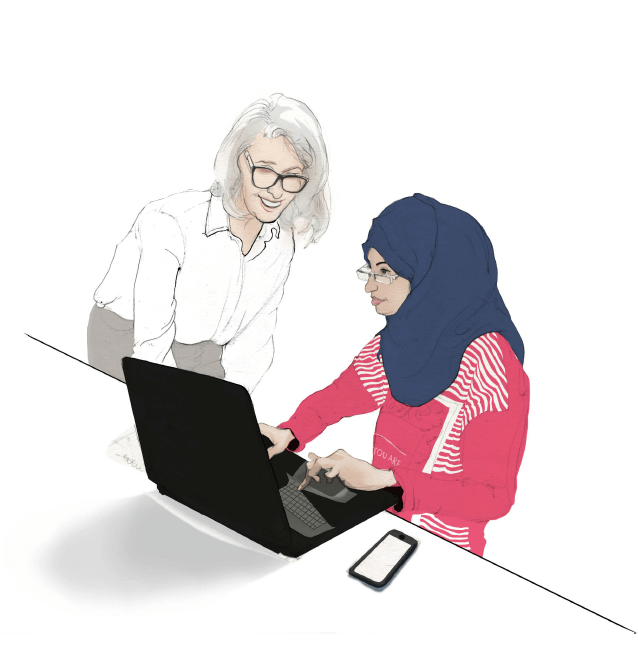
Matching people is extremely beneficial but subject to chance and so ad hoc. UK professionals will know the sector, and be able to help with work-specific English language support, where to look for jobs, and expectations for application forms, CVs and interviews.
Develop a scheme for members, calling for those willing to act as a specialised mentor to an individual. Maintain a volunteer database, including information such as specialist subject areas, geographic location (for people wishing to meet in person) and language skills or previous experience if they themselves are a migrant.
Reach out to refugee support organisations who are familiar with mentoring schemes and can offer training or partnership work.
Access to events and support
Allow refugees to attend appropriate events, meetings and workshops organised by the profession. Publicise them via refugee support organisations who will be able to reach out to service users.
Refugees often have little choice in where they live, and those outside large metropolitan areas may not have local support or capacity to travel easily. Online provision and resources can be very beneficial.
“candidates have always said to us that’s one of the things that they want … to meet fellow professionals and we will never be able to provide that, and the insight that those professionals in those sectors can provide directly to our clients. So we’re really keen to continue to do that.” Refugee Employment Support Organisation
Engage employers
Placements and work shadowing opportunities are extremely important as an entry to the UK workplace and professional culture. Members are employees and can engage their employers, with advocacy and support by the professional body, to participate and potentially gain valuable skills. The NHS has long been engaged with health professionals, but there are other innovative approaches to match employers and refugees for IT professionals with Blue Hope, and construction and engineering professionals with Renaisi.
“Lack of UK work experience, and, specifically, paid work experience were also seen as barriers, as were a lack of networks, specifically, professional networks.” (Tweed & Stacey 2018, p.20)
Volunteering and placements with the professional body
A role within the professional body, such as administrative support, shadowing, and the opportunity to look at applications and attend events would help develop knowledge of the profession and language.
 refugeeprofessionals.uk